One of the organizations that 410 partners with in Haiti is Mission of Hope. They have been instrumental in our efforts to relocate a community of deaf Haitians displaced and left homeless by the 2010 earthquake, to the community of Leveque. Last week, thanks to their consistent communication with the Clinton Foundation, the former president Bill Clinton (husband to Secretary of State Hillary Clinton), was able to visit the community of Laveque and even meet with several members of the deaf community last week. Here is an abbreviation of the report we received from MOH:
MOH has been talking to the Clinton Foundation for a while now, and they asked for a visit last week. Clinton was in-country during the 3-year anniversary and fit in a visit to Leveque! He came for a mid-day visit in a 6 car, 8 moto caravan and literal clouds of dust! Visited the soccer field, water filtration system, and two houses!
He met with a few people from the community: Berthide, Diana, Mackenson, Pastor Beau, Roosevelt, Menorce, Thimagene, and Pierre Richard – each representing a different aspect of the community. Everyone except Mack, Berthide, and Roosevelt (who communicate through sign language) completely lost their words. 🙂 But those three did a great job introducing themselves and talking about their role and life in Leveque. There wasn’t a lot of time for each one, but they did great with what they had!
Most of Clinton’s discussion ended up being with Brad, Mr. Marc, and Manasse (MOH agronomist). He is really interested in seeing if some of the drip agriculture programs that they do in East Africa would work here. Lots of water-related ag. discussion. He’s also very interested in solar lighting for the school and community center. No official commitments yet, but we’re following up…
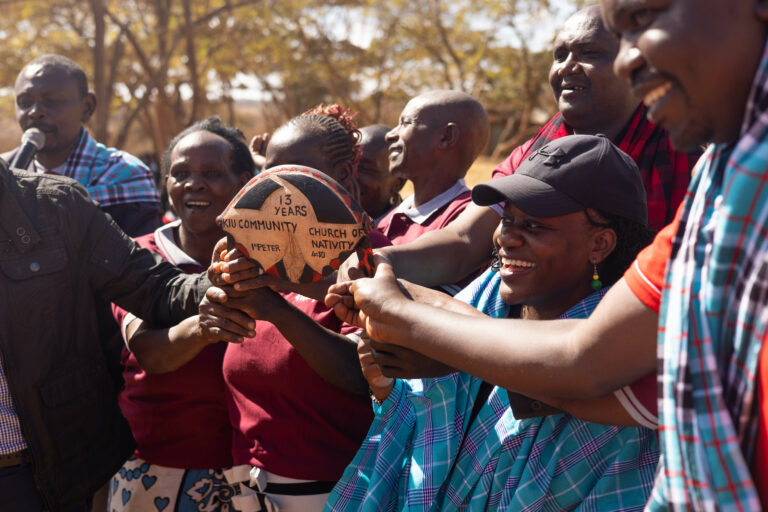
Our partnership with Kiu community started way back in 2009 making it one of the first communities to partner with the 410 Bridge since its inception in Kenya in 2006.
At the 410 Bridge, we work through the community leaders who ensure continuity of the community’s development even after graduation. During our partnership journey, we walk alongside indigenous community leaders and church leaders as they mobilize and unify the community to participate in their own development – shifting their perspectives and owning the solutions.
If you haven’t yet had the opportunity to go on a mission trip to Kenya, allow me to do my best to try to put into words what an incredible life-changing experience that you really need to do at least once in your life.
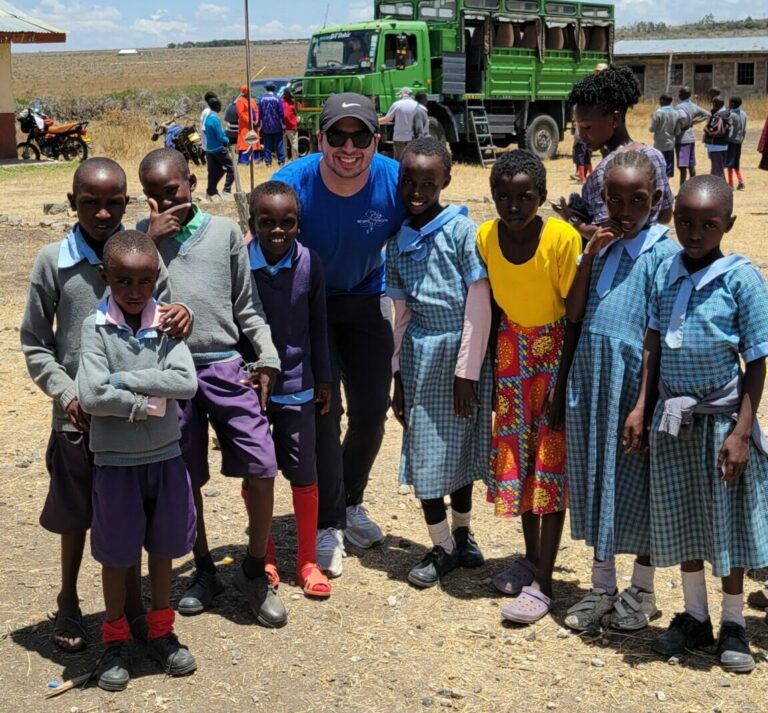
I was recently blessed to travel to Mutirithia, Kenya with an amazing group of 20 other Christian men to serve the families in that community over the course of a week.
We prepared for weeks to make sure everyone understood the primary objective of the trip, which was to build upon relationships already formed in the community and to spread the Word to as many people as we could.
Allow me to unfold a day-by-day glimpse of what we experienced:
Embarking on a mission trip with The 410 Bridge is an invitation to witness the transformative power of holistic community development—a paradigm shift in the way we approach poverty alleviation.
As trip participants, you’re not just joining a journey to serve communities in need; you’re stepping into the role of advocates, and champions of sustainable change driven by partnership and empowerment.